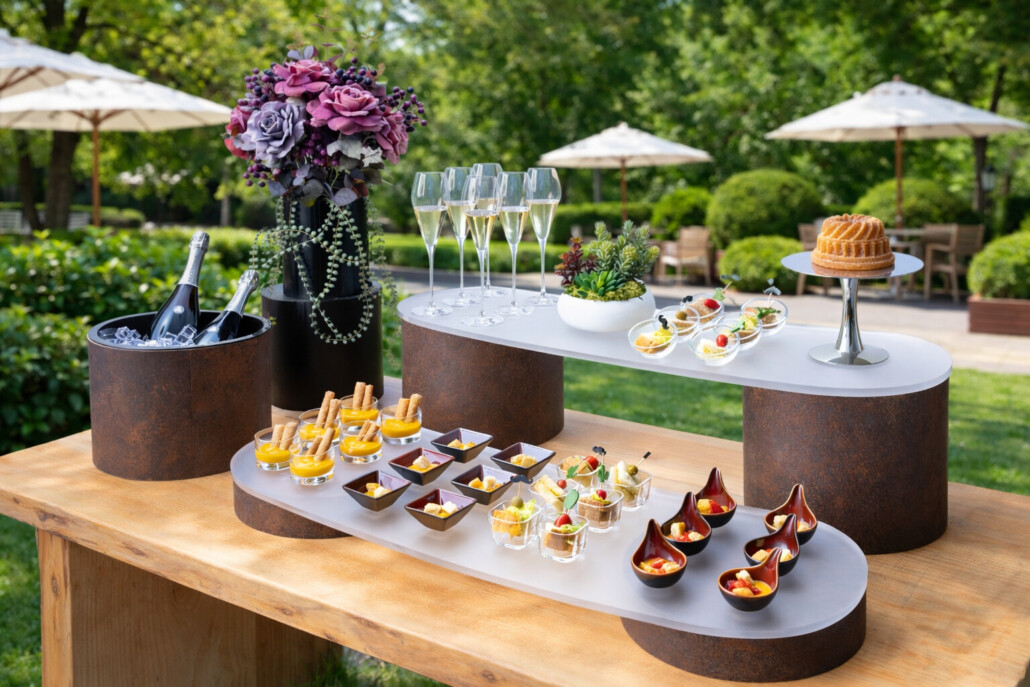
Outdoor buffets for hotels and events: why you need the right materials
Index:
- Why it's not enough to use on the outside what works on the inside
- Because outdoor service has different needs
- The most common mistake: choosing based on habit
- Melamine: the strategic choice for outdoor buffets
- Polycarbonate: the right material when safety and continuity are needed.
- Mistakes to avoid when choosing colors
- Outdoor hospitality: it's not just a matter of aesthetics
- How to choose the right outdoor solutions
Why it's not enough to use on the outside what works on the inside
In At outdoor events, the same mistake is often made: Yes take out what is used insidePlates, glasses, trays and accessories designed for indoor spaces are also used outdoors, as if the context remained identical. But Operating conditions change outdoors, service times e even the way guests experience the experience.
Inside everything is more controllable: i spaces are defined, staff paths are more linear, the service moves in a protected environment and materials work in a more stable situation. On the outside, however, even a very well-finished installation must deal with different needs.: increased traffic, the need for speed, a greater risk of collisions, more operational steps, and management that must remain efficient even during peak traffic times.
È It is precisely here that the difference between a simple transposition of the indoor service and a true outdoor design emerges. Why it is not enough for a product to be beautiful or coherent with the mise en place: It must also be practical to manage, safe, durable and suitable to support the real pace of the serviceWhen this aspect is underestimated, difficulties emerge immediately and are reflected both in the internal organization and in the customer's final perception.
A completely different operating context
L'outdoor It's not just an "outdoor" version of the traditional buffet. It's a context with its own dynamics, which requires a different logic in the choice of materials and solutions. Staff move around more, the setups often need to be more flexible, service must maintain fluidity even in less predictable situationsAll of this makes it essential to use elements designed to simplify work, not complicate it.
When the wrong materials slow down service
One of the first effects of an unsuitable choice concern the operationMaterials that are too delicate, heavy, or impractical to transport can slow down setup, make replenishment more difficult, and increase handling times during service. In an outdoor buffet, however, every detail must help the team to work continuously, speed and order. If this does not happen, the problem doesn't stay behind the scenes: it reaches into the guest experience.
Safety, durability and practicality become priorities
outside, features such as lightness, impact resistance, ease of cleaning and handling take on an even more important valueThese are not secondary details, but elements that directly impact the quality of the service. A more suitable material allows you to reduce unforeseen events, simplify management and maintain higher operational continuity, even in the moments of greatest intensity.
Customer perception also changes
Un A well-organized outdoor buffet is not only noticeable for its aesthetics, but for the naturalness with which everything worksGuests immediately perceive when service is smooth, orderly, and consistent with the context. On the contrary, even an elegant mise en place loses value if the service slows down, if the materials do not convey reliability or if the whole appears poorly designed for the external environment. For this reason The choice of materials is not just technical: it is also an integral part of the image that the structure wants to convey..
Designing the outdoors with a dedicated logic
Really thinking about the outdoors means adopting a different logic right from the startThis means choosing solutions that combine aesthetics and functionality, that support the staff's work and help maintain a high level of service. Materials such as melamine and polycarbonate respond well to this very need., because they allow you to face the outside with more practical tools with the real needs of hotels, buffets and events.
Because outdoor service has different needs
Il outdoor service cannot be managed with the same logic as indoor serviceEven when the format is similar: buffet, breakfast, aperitif, event or poolside service the external context introduces completely different operating conditions, which affect both the organization and the choice of materials. Thinking of Using the same solutions used indoors outdoors often means underestimating everything that changes behind the scenes.
Inside, the staff work in more controlled spaces, with predictable routes, stable support points and generally more linear management. Outdoors, however, the service must adapt to a more dynamic reality: travel increases, time is compressed, unforeseen events multiply and every element of the setup must meet criteria of practicality, resistance and safety. It is This is precisely why the outdoor world requires dedicated design, not a simple extension of the indoor service.
Faster setup and re-setup times
Another decisive element is speed. In outdoor services, it is often it is necessary to set up and re-set up quickly, with higher frequency and with less margin for slow or complex managementThis applies to a buffet on the terrace, an outdoor breakfast, a garden event, or poolside service: each phase must be quick, orderly and functional.
When materials are too heavy, delicate, or impractical to handle, the time required to prepare, restore, or reorganize the service increases. On the contrary, solutions designed for professional outdoor use allow for higher operational fluidity and help the team work more efficiently even in the most intense moments.
Increased risk of impacts, falls and breakages
Outside, the risk associated with handling also increasesMore passages, more transports and more changes in setup inevitably mean more chances of bumps, falls or damage. This makes the strength of materials a central factor, not secondary.
In a indoor service can sometimes also favor a more delicate or more decorative component. nell 'outdoorinstead, it is it is essential to find a balance between image and robustnessPlates, glasses and accessories must support more dynamic use without compromising the perceived quality of the service. Choosing the right material helps limit unforeseen events, avoid interruptions, and protect business continuity.
More practical materials for staff work
Talking about outdoor hospitality, the point is not only the final aesthetic result, but also the ease with which the staff can manage the service. Every element that simplifies transport, arrangement, cleaning and tidying contributes to improving overall efficiency..
For this reason in the solutions intended for outdoor use become particularly important features such as lightness, stackability, ease of washing and handling. Are qualities that help staff work better, reduce operational fatigue and allow you to maintain high standards even in more dynamic contexts and a well-designed outdoor buffet It's not just beautiful to look at: it's above all more easy to manage.
Service priorities are changing
Inside, often the priority is focused above all on presentation and stylistic coherence. Externally, these components remain important, but must coexist with more practical and immediate needsSafety, durability, speed of management, and functionality of the setup become real priorities, because they directly impact the quality of service.
This does not mean giving up elegance, but design the service more intelligently. The The most effective outdoor solutions are those that manage to combine image and performance, offering a carefully curated table setting without creating operational obstacles. It's precisely this balance that makes the difference between a merely pleasant setting and a truly well-thought-out service.
Outdoor means designing, not adapting
The key point is this: the outdoors shouldn't be adapted, it should be designed. When the outside is considered as a context with its own rules, Also choice of materials changes approachWe no longer select just products that are beautiful or environmentally friendly, but solutions that can support the pace, movements, and concrete needs of the service.
For hotels, buffets and events, this means orient oneself towards materials and accessories capable of guaranteeing efficiency, order and continuityOnly in this way can outdoor service truly express its full potential, without turning into a more complicated version of indoor service.
The most common mistake: choosing based on habit
Many hospitality businesses, hotels, and event venues organize their outdoor service based on a very simple logic: use outdoors what already works indoors. It's an understandable choice, born of habit, apparent practicality, and the idea that a proven service can be replicated without major modifications. Initially, it seems like the most straightforward solution: take plates, glasses, trays, and accessories already in use and move them to the terrace, garden, poolside, or any other outdoor area.
The problem is that habit, in outdoor service, can become a limitation. What works well indoors may not necessarily maintain the same effectiveness in a different operational context. Outdoors has its own needs, different rhythms, and specific critical issues that cannot be managed automatically. When we continue to choose "as it has always been done", without truly evaluating the context, the risk is that of building a service that appears correct but in reality is more fragile, slower and less efficient..
When custom takes the place of planning
The error almost never arises from a lack of attention, but from a very common mechanism: rely on what is familiarIn hotels, catering, and the events world, processes that work naturally tend to be repeated. This approach, however, may become ineffective when the context of use changes..
Outdoor spaces require dedicated planning. It's not enough to simply replicate a formula already used indoors, because outside, staff routes, service times, travel frequency, and exposure to impacts and unexpected events all vary. Continuing to think out of habit often means ignoring these differences and intervening only when problems have already arisen.
At first it all seems simple
One of the most insidious aspects of this mistake is that, at first, it's not immediately noticeable. Service begins, the setup is ready, the table setting appears coherent, and the overall impression is that everything is working properly. It's precisely this apparent simplicity that makes the habit so difficult to challenge.
But as the service continues, critical issues quickly emerge. A surge in traffic, increased travel, or the need for rapid reorganization are enough to make everything more complex. Materials begin to show their limitations, management becomes less fluid, and staff are forced to work harder to compensate for what a more appropriate approach could have prevented.
Problems that arise during the service
When the choice of materials and solutions is based solely on habit, the effects are most noticeable in daily operations. The initial signs may seem subtle: less agile transportation, slower reorganization, greater difficulty maintaining order and continuity. But when combined, these factors have a tangible impact on the overall quality of service.
The risk of breakdowns increases, management times are extended, staff find themselves moving more than necessary, and the organization loses some of its fluidity. Presentation also suffers: less organized tables, improvised substitutions, less visual consistency, and a general sense of less control. In a hospitality context, all of this translates into an experience perceived as less refined.
The impact on staff work
Materials are often discussed solely from an aesthetic perspective, but the real difference lies in the staff's work. When the solutions used aren't designed for the outdoors, staff must constantly compensate: transport more carefully, handle more slowly, check more frequently, tidy up more frequently, and approach each operational step with greater caution.
This leads to increased fatigue and lower overall efficiency. Instead of supporting the team's work, materials become an element that requires more energy and time. At a buffet, an outdoor breakfast, or an outdoor event, this can compromise the smooth running of the service and make it more difficult to maintain high standards throughout the experience.
Even the guest senses when something is not working
The error of choosing based on habit never stays behind the scenes. Even if the customer doesn't directly see the internal management, they can clearly sense when the service slows down. A less organized buffet, slower service times, small mismatches in the layout, or a less consistent presentation impact the perceived quality of the experience.
In the hotel and hospitality world, the difference often lies in these very details. A well-designed service conveys naturalness, control, and consistency. Conversely, a service built out of habit may appear correct on the surface, but less solid in substance. And when the substance isn't up to scratch, the overall image of the facility suffers.
Overcoming the habit to choose more strategically
To truly improve outdoor service, the first step is to stop considering it a simple extension of the indoor environment. This means moving away from the "it's always been done this way" mentality and starting to evaluate materials and solutions based on actual use, workflows, and the specific needs of the outdoor context.
Choosing strategically means considering which products will make the service smoother, safer, quicker to manage, and more consistent with the facility's standard. Only then can you build a truly efficient outdoor space, where aesthetics and functionality work hand in hand. And this is precisely where materials like melamine and polycarbonate become valuable allies: not as a simple alternative, but as a concrete solution to specific operational needs.
Melamine: the strategic choice for outdoor buffets
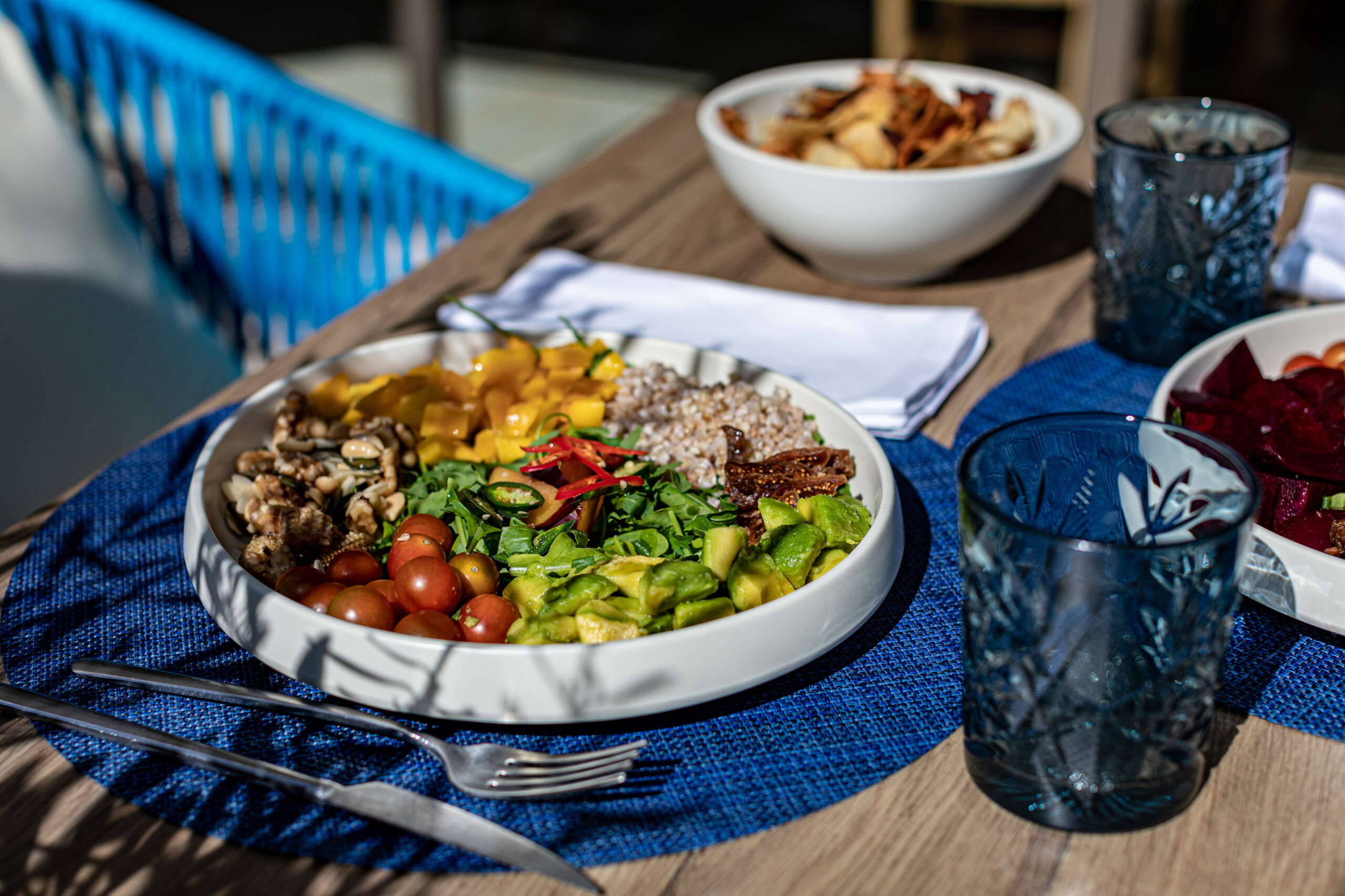
When it comes to outdoor buffets, melamine represents one of the most effective solutions for combining aesthetics, practicality, and operational continuity. It's not just a functional alternative to other materials, but a strategic choice for any context where high standards of service must be maintained even outdoors. Hotels, catering, terrace buffets, al fresco breakfasts, poolside events, and hospitality settings require elements capable of withstanding intense activity without compromising presentation.
In this very context, melamine stands out because it responds to very specific needs. On the one hand, it offers lightness and ease of handling, on the other, it guarantees a good aesthetic result, which is increasingly important today, even in professional services. The result is a material that doesn't sacrifice image for practicality, but manages to balance both aspects.
A material designed for everyday work
In an outdoor buffet, every choice must be carefully considered, including the staff's workload. Plates, bowls, trays, and accessories must not only look appropriate, but above all be easy to transport, arrange, and manage throughout the service. Melamine is ideal for this context because it reduces many of the critical issues typical of intensive use.
Its light weight facilitates setup and retrieval, streamlines staff movement, and streamlines reordering. In environments where service requires speed, frequent relocation, and continuous replenishment, this feature becomes a real advantage. Easier-to-handle material helps improve overall efficiency and reduce operational fatigue.
Resistance and continuity in service
One of the reasons melamine is particularly popular for outdoor use is its ability to withstand dynamic use. Outdoors, the risk of impacts, falls, and more frequent handling is inevitably higher than indoors. Therefore, the material's durability plays a key role.
Choosing melamine means being able to count on a solution better suited to handling the pressures of daily service. Fewer breakages mean fewer unexpected replacements, fewer interruptions, and more streamlined management throughout the buffet. In a hotel or at an outdoor event, this continuity makes a huge difference, as it allows for order, rhythm, and perceived quality to be maintained even during the busiest moments.
More practicality without sacrificing presentation
For a long time, practical materials were perceived as a compromise in terms of aesthetics. This is no longer the case. Melamine has evolved and offers finishes, textures, and visual effects that blend seamlessly into even the most sophisticated table settings and high-end environments.
This aspect is particularly relevant in the hospitality sector, where the buffet is not just a moment of service, but also a way to represent the brand and style of the establishment. Using melamine plates and accessories therefore allows for a neat, contemporary, and consistent presentation, without sacrificing the practicality necessary for outdoor dining. Functionality, in this case, doesn't detract from the image, but rather supports it.
A versatile solution for different outdoor contexts
One of melamine's strengths is its versatility. It can be used effectively in a wide variety of contexts: from terrace breakfasts to event buffets, from poolside service to catering setups, and even situations requiring frequent tidying and aesthetic continuity.
This adaptability makes it particularly attractive for hotels and hospitality professionals looking to build a coherent yet flexible offering. Being able to rely on a material capable of performing well across multiple settings simplifies management and maintains a consistent visual line between different service moments. This is not only an operational advantage, but also a strategic one for the overall image of the facility.
Why melamine is a strategic choice
Calling melamine a strategic choice means recognizing that its value goes beyond mere practicality. It's useful not just because it's lightweight or durable, but because it helps build a more efficient, reliable outdoor service that's more aligned with the real needs of the hospitality industry.
In other words, melamine allows you to approach the outdoors with a more professional approach. It helps staff work better, reduces operational issues, supports service continuity, and helps maintain a high perceived quality of the experience. Therefore, in a well-designed outdoor buffet, it's not just a functional choice: it's a concrete lever for improving organization, image, and performance.
Aesthetics and functionality can coexist
When it comes to outdoor dining, choosing durable materials isn't enough. It's important to select solutions that blend seamlessly with the environment, enhance the table setting, and support daily work. Melamine perfectly meets this need because it combines two aspects that must go hand in hand in hospitality: beauty and functionality.
It's this ability to strike a balance that makes it so appealing for buffets, breakfasts, and professional outdoor settings. When the right materials simplify service while simultaneously enhancing presentation, the result isn't just a more practical setup, but a more robust, organized experience consistent with the quality hotels and events seek to convey.
Polycarbonate: the right material when safety and continuity are needed.
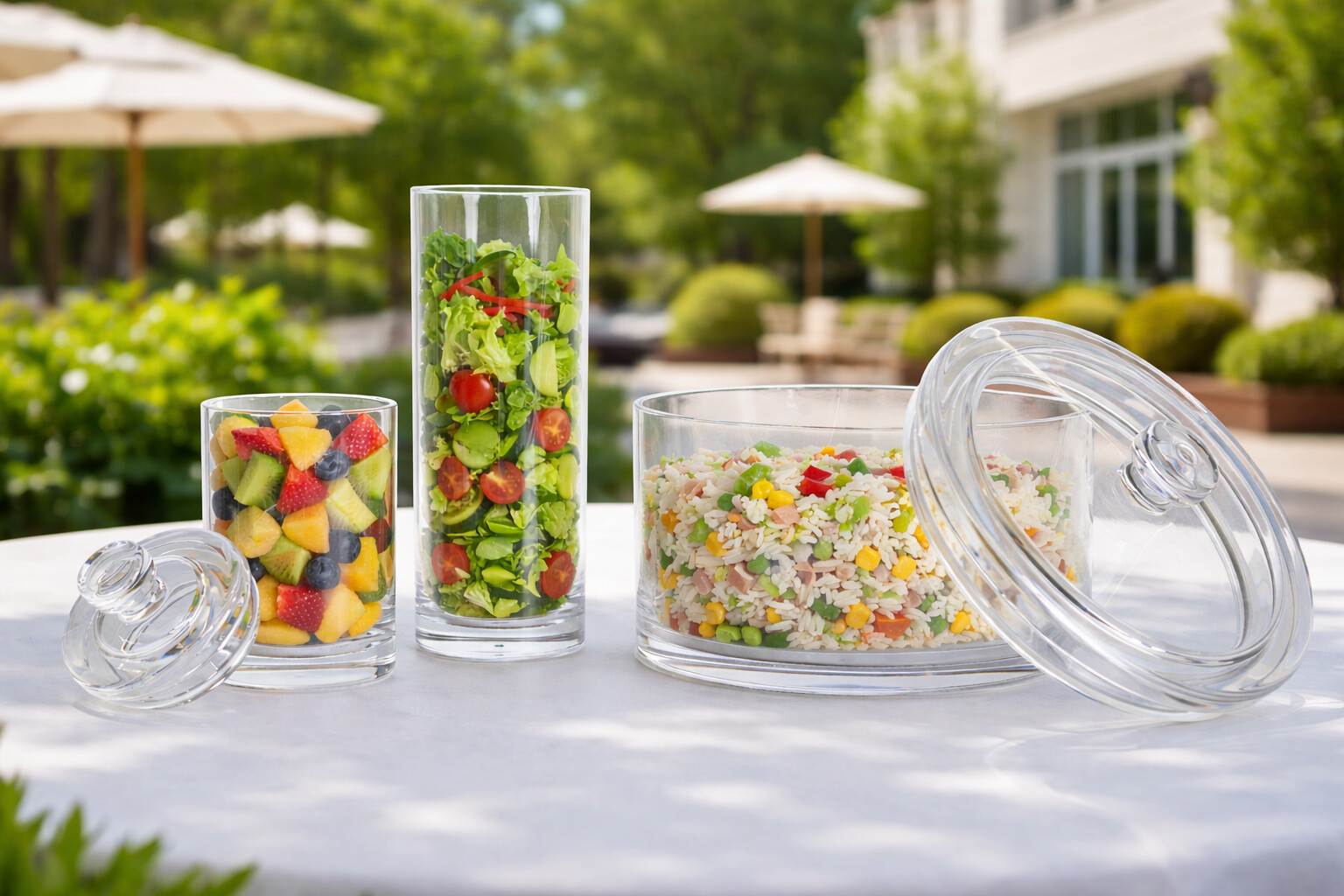
While melamine is a strategic choice for plates, bowls, and buffet accessories, polycarbonate is ideal for beverage service and all those transparent items intended for outdoor use. Polycarbonate glasses, goblets, tumblers, covers, and accessories meet a very specific need: maintaining a smooth, safe, and well-organized service, even in contexts where the risk of glass breakage can quickly become an operational problem.
In the hospitality sector, this characteristic takes on even greater importance. On a hotel terrace, by the pool, in a rooftop bar, during a corporate event or an outdoor reception, the quality of service also depends on the materials' ability to withstand intense activity without creating problems. Polycarbonate stands out precisely for this: it offers transparency, practicality, and durability in a formula designed to simplify work and protect the guest experience.
When safety becomes a real priority
In many outdoor settings, the choice of materials can't be guided solely by aesthetics. There are situations where safety becomes a concrete, daily priority. Think pool areas, terrace services, high-traffic events, or buffets where staff must quickly handle large quantities of drinks: in all these cases, the use of glass can increase risks and complicate management.
Polycarbonate represents an effective solution precisely because it significantly reduces the risk of breakage. This not only prevents accidents, but also avoids service interruptions, slowdowns, and unscheduled cleaning or replacement operations. In a high-traffic environment, being able to rely on safer materials means protecting both guests and staff.
Operational continuity even in the most intense moments
One of the most important aspects of outdoor service is continuity. Everything must proceed smoothly: beverages must be served without delay, tables must remain tidy, supplies must be refilled quickly, and each phase must be supported by reliable equipment. Polycarbonate helps maintain this continuity because it is designed to withstand dynamic and frequent use.
When materials can keep up with the pace of service, the team's work becomes easier and the entire organization benefits. Fewer breakdowns, fewer unexpected replacements, and fewer unexpected events mean more streamlined management and a greater ability to maintain a high level of service, even during peak periods. In this sense, polycarbonate is more than just a practical material: it's a tool that contributes to the stability of service.
A valuable ally for outdoor beverages
In beverage service, the balance between image and functionality is crucial. Glasses and stemware must enhance presentation, but also be practical to handle in contexts where speed, movement, and safety are as important as aesthetics. Polycarbonate meets this dual requirement well, maintaining good visual quality without introducing the fragility typical of other materials.
This makes it particularly suitable for any situation where beverage consumption is a central part of the experience: terrace aperitifs, outdoor events, poolside service, receptions, catering, and convivial gatherings in open spaces. In these contexts, choosing polycarbonate means building a more reliable service that meets real operational needs.
More convenience in daily management
Beyond safety, polycarbonate offers very tangible management advantages. Its lightweight design makes it easier to transport and tidy up, while its ease of use helps staff work more efficiently. In a well-organized outdoor service, these aspects make the difference because they directly impact time, efficiency, and the overall quality of operations.
Reusability and ease of cleaning are also important, especially for facilities that want to maintain high standards while maintaining efficient supply management. When a material combines durability, lightness, and practicality, it becomes easier to ensure continuity and order throughout all phases of service, from initial preparation to final tidying up.
Not just an alternative to glass, but a design choice
One of the most common mistakes is to consider polycarbonate simply as a substitute for glass. In reality, in outdoor settings, it's a true design choice. It's chosen not only to prevent breakage, but because it more precisely meets the needs of certain contexts. Where glass might be impractical or too delicate, polycarbonate allows for greater peace of mind and a more suitable approach to outdoor environments.
This difference is important because it shifts the thinking from a simple replacement to a more strategic choice. It's not about giving up something, but about adopting a material that improves management, makes the service safer, and better supports the team's daily work.
Security and image can coexist
In the hospitality world, choosing safer solutions doesn't mean lowering the standard of presentation. On the contrary, a well-designed service is precisely what combines elegance, practicality, and reliability. Polycarbonate fits this logic because it allows you to maintain a refined image even in contexts where functionality must be a priority.
This makes it particularly useful in all those situations where beverages have a strong aesthetic value but also need to be managed quickly and consistently. When safety and image work together, the result is a smoother, more professional outdoor service that is more consistent with the standards required by hotels, events, and hospitality facilities.
Outdoor hospitality: it's not just a matter of aesthetics
In the hospitality industry, one of the most common mistakes is to consider materials, tableware, and accessories as purely aesthetic choices. We tend to focus primarily on visual impact: color, finish, consistency with the style of the establishment, and the final effect on the table or buffet. These are all important elements, of course, but they're not enough. In outdoor settings, every aesthetic choice must also be functional.
A well-designed outdoor buffet shouldn't just look well-kept. It should help staff work better, support service rhythms, reduce management issues, and maintain a sense of order, quality, and reliability over time. This is where the material stops being a stylistic detail and becomes an integral part of the experience. Because in hospitality, especially when working outdoors, what matters is not just what the guest sees, but also everything that allows the service to run smoothly.
Aesthetics matter, but they alone are not enough.
In a hotel, resort, or outdoor event, presentation plays a crucial role. The table setting immediately communicates the quality of the facility, the attention to detail, and the brand positioning. A well-constructed setup helps create atmosphere, reinforces the space's identity, and makes the experience more memorable.
However, when it comes to outdoor hospitality, stopping at aesthetics can be reductive. A material can be beautiful, elegant, and perfectly in keeping with the image of the facility, but if it can't keep up with the pace of service, if it's awkward to handle, or if it complicates the staff's work, it ends up weakening the entire experience. Visual impact is attractive, but it's functionality that truly sustains the quality of service over time.
The right material also improves the work of the staff
A successful buffet requires not only good presentation, but also efficient organization. Staff must be able to set up, move, tidy up, and serve quickly and consistently. Therefore, the choice of materials directly impacts the staff's daily work.
Items that are too fragile, heavy, or impractical to handle can slow down every operation, increase the attention required during transportation, and make service management more complex. Conversely, lighter, more durable, and functional materials help streamline every step. In this sense, the quality perceived by the customer also comes from what the customer doesn't see: a smoothly running organization and a staff that can work with confidence and control.
A premium service must work as well as look
In outdoor hospitality, especially in high-end settings, the concept of premium isn't just about elegance. A premium experience is one that combines beauty, order, naturalness, and continuity. Everything must appear simple to the guest, even when there's a complex management structure behind the scenes.
If service slows down, if the layout loses consistency, if small operational difficulties arise, or if the buffet appears less tidy over time, the perceived value diminishes. Even with an aesthetically pleasing table setting, the overall experience risks being compromised. Therefore, in a premium setting, materials must be chosen not only for their initial visual impact, but for their ability to sustain the standard throughout the service.
Functionality and image must work together
In the hospitality world, there's no real contradiction between aesthetics and functionality. The best solutions are those that successfully combine both. A well-designed outdoor buffet must be beautiful to look at, consistent with its surroundings, and capable of conveying the style of the establishment. But it must also be practical, durable, safe, and easy to manage.
When these aspects work together, the result is much more effective. The space appears tidy, the service remains fluid, and the brand image is strengthened. Conversely, when you choose with visual impact in mind, you risk creating a setup that only works well at first, but loses its effectiveness once the service gets going.
Perceived quality comes from operational details
Guests don't analyze the materials technically, but they perceive the final result with great clarity. They notice whether the buffet is tidy, whether the service is smooth, whether the setup remains consistent from start to finish, and whether everything appears effortless. This means that many operational details translate, in the customer's eyes, into perceived quality.
Choosing the right materials impacts precisely this aspect. It improves service continuity, streamlines the team's work, and helps maintain the overall image of the setup over time. In other words, what appears to be a technical decision actually becomes a tool for positioning and enhancing the facility's reputation.
Outdoors, the material is part of the experience
Thinking of materials as a mere aesthetic complement underestimates their strategic role. In outdoor hospitality, materials are an active part of the experience: they contribute to safety, practicality, visual order, operational speed, and the overall quality of service.
This is why solutions like melamine and polycarbonate are so important. Not because they neutrally replace other materials, but because they better meet the real needs of the exterior. They enable a more stable, seamless service, more consistent with the level of attention that hotels, resorts, and events seek to offer their guests.
How to choose the right outdoor solutions
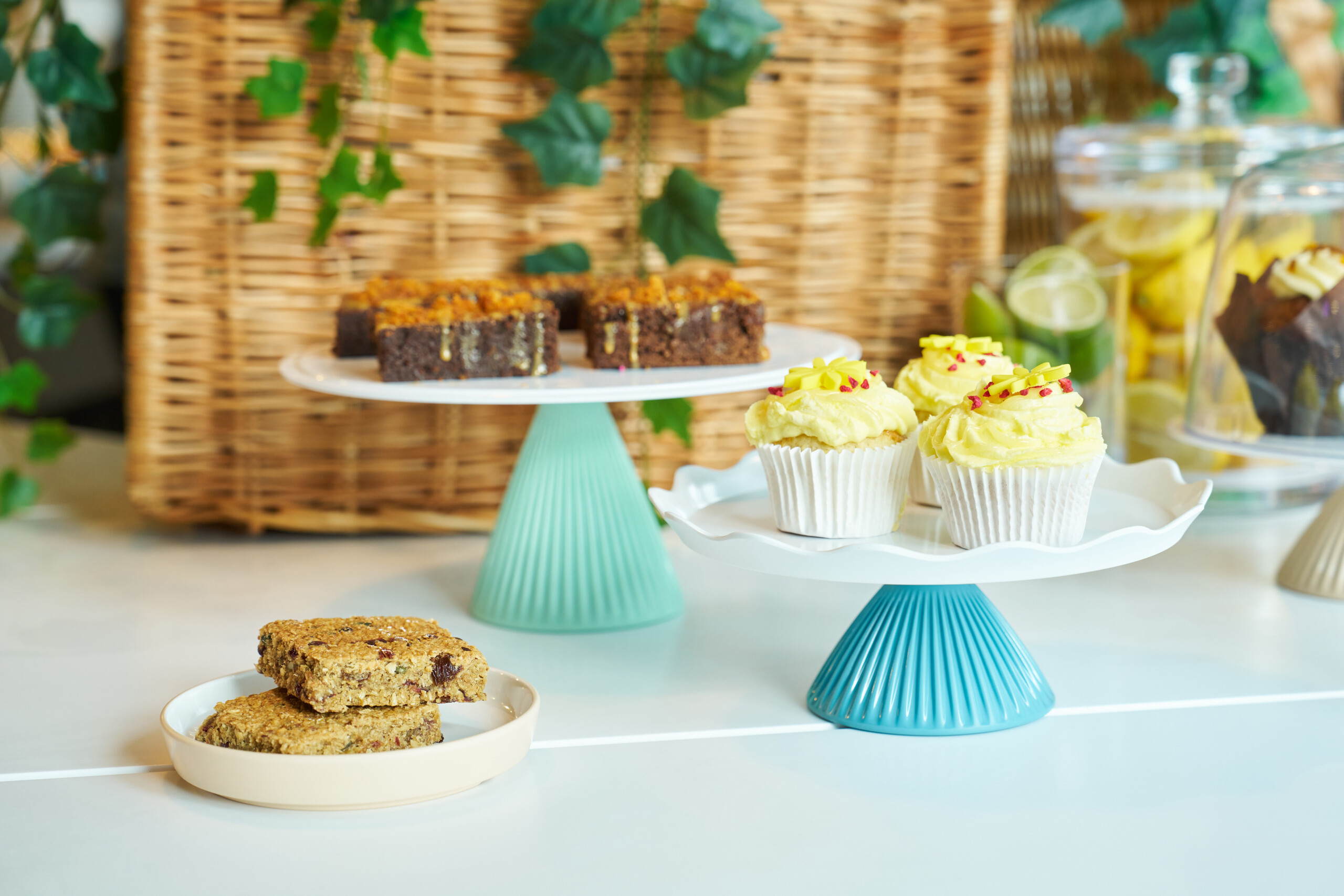
To build a truly effective outdoor service, it's not enough to choose beautiful products. You need to select solutions that work every day, that help staff perform better, and that enhance the guest experience down to the last detail. In hospitality, especially outdoors, every element must contribute to making service smoother, more orderly, and more consistent with the quality of the facility.
For this reason, it's important to evaluate several essential criteria: impact resistance, light weight, ease of transport, quick handling, stackability, ease of cleaning, and aesthetic consistency with the existing setting. These are all aspects that directly impact daily operations and, if carefully considered, can transform a simple outdoor setup into a more efficient and professional service.
When the right choice really simplifies service
In the daily work of hotels, buffets, and events, the difference is seen in the ease with which everything flows. A plate that's easier to manage, a glass that's safer to use, an accessory that's more suited to the pace of service: these are details that seem small, but together they create simpler management and a higher perceived quality.
Choosing solutions designed for the outdoors means precisely this: reducing unexpected incidents, speeding up operational processes, and helping staff maintain order, continuity, and control even during the busiest times. This is where the product stops being a mere accessory and becomes a true ally of the service.
Melamine for a more practical and refined outdoor buffet
When you need plates, bowls, trays, and accessories that combine aesthetics and durability, melamine is a particularly effective choice. It allows you to create a clean, contemporary buffet, while also offering the practicality that makes all the difference on the outside. It's an ideal solution for those who want to maintain a high standard without complicating the team's work.
For hotels, accommodation facilities, and hospitality professionals, this means being able to count on an outdoor line that truly supports the service: lighter, more versatile, and better suited to contexts where presentation and functionality must coexist naturally.
Polycarbonate for safer and smoother beverages
For beverage service, however, polycarbonate is the right solution when safety, durability, and operational continuity are priorities. Transparent glasses, stemware, and solutions designed for outdoor use help you manage terraces, pools, rooftops, events, and high-traffic areas with greater peace of mind, where glass can be less practical to use.
Choosing polycarbonate means improving service management without sacrificing a refined presentation. It means offering staff more reliable tools and guests a safer, more organized, and more consistent experience.
With Yegam, the outdoors is designed to really work
The real difference lies not in bringing outside what's used inside, but in choosing solutions designed to meet the real needs of the outside world. This is where Yegam's approach gains value: offering products that don't simply complete the setup, but contribute to improving the quality of service, the staff's work, and the guest's overall experience.
With melamine, polycarbonate, and hospitality solutions, Yegam helps hotels and industry professionals create more functional, elegant, and manageable outdoor spaces. Not just a simple adaptation, but a line designed for real use.